
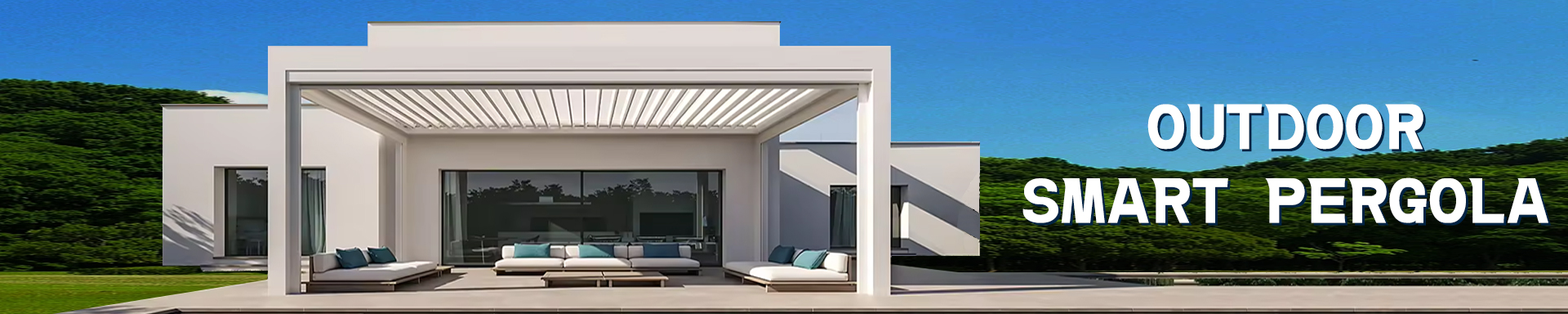
1. Structural Customization Options for Modern Homes
Structural customization is the foundation of a functional and visually integrated carport. Getting the frame, beams, and spans right ensures your carport is not just protective but also complements your modern home’s architecture. From column placement to load-bearing capacity, every detail affects usability and long-term performance.
1.1 Frame Configuration and Column Placement
Choosing the correct frame layout is critical. Column placement must allow vehicles to maneuver easily while keeping the structure visually light. For homes with narrow driveways or multiple vehicles, designers often recommend asymmetrical or offset columns to maximize open space without compromising strength.
In real-world applications, homeowners using a Custom Aluminum Carport often request specific column spacing to align with existing landscaping or architectural features, like overhangs or entryways. A well-planned frame prevents future frustration with tight turns or blocked access points.
1.2 Beam Size, Thickness, and Load Adaptation
Beam selection determines both how much weight the carport can safely support and how well it withstands environmental stress. Residential builds with occasional heavy vehicles, snow loads, or rooftop equipment need beams engineered for higher live and dead loads.
Here’s a practical reference comparing common residential aluminum beam options:
| Beam Type | Wall Thickness | Load Capacity | Typical Use Case |
|---|---|---|---|
| Standard Aluminum | 2.0 mm | 500–600 kg | Single-car standard usage |
| Reinforced Aluminum | 3.0 mm | 800–1,000 kg | Multi-car or heavy vehicle |
| Extra-Heavy Duty | 4.0 mm | 1,200–1,500 kg | Elevated snow zones or large SUVs |
Selecting the right thickness ensures minimal deflection and vibration, even under repeated use. In several suburban modern homes, moving from standard to reinforced beams eliminated sagging and improved daily confidence in the structure.
1.3 Span Width and Open-Space Design
Open-space design affects both functionality and aesthetics. Wider spans reduce column obstruction, providing easier vehicle access and creating a more seamless integration with the driveway and home. Aluminum structures often enable longer, column-free spans than steel without adding excessive weight.
For example, a homeowner upgrading to a Modern Metal Carport requested a 24-foot single-span design to accommodate an SUV and a compact car side by side. By carefully calculating beam size, column placement, and anchoring, installers maintained stability while achieving the open, minimalist look desired for the modern home.
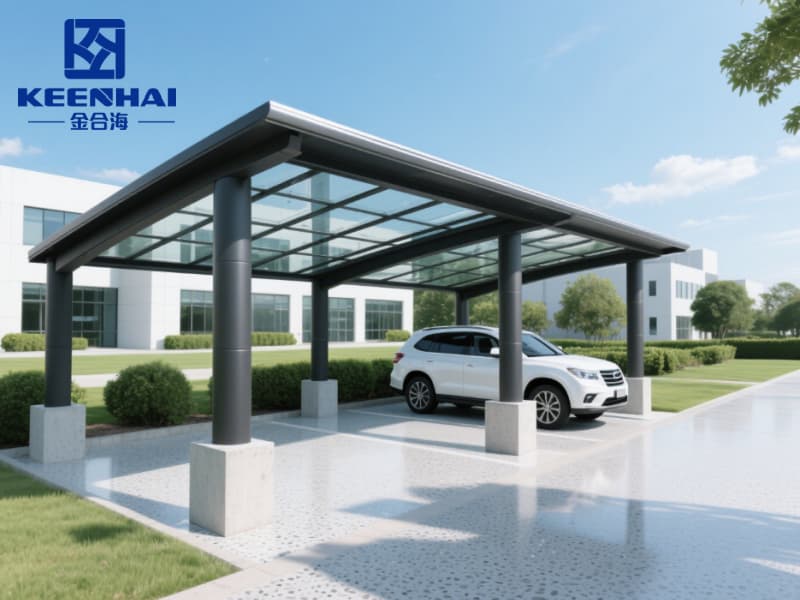
2. Custom Layout and Size Configurations
Custom layouts ensure that a carport not only fits your vehicles but also enhances everyday convenience and preserves your home’s aesthetics. Ignoring layout details often leads to cramped access, inefficient space usage, or visual imbalance. The key is to evaluate vehicle count, height, and site geometry before committing to a design.
2.1 Single, Double, and Multi-Vehicle Layouts
The first step is determining how many vehicles the carport must handle without forcing tight maneuvering or repeated adjustments. Single layouts suit compact households, double layouts work for families with multiple cars, and multi-vehicle arrangements accommodate recreational vehicles or guest parking.
In practice:
-
Measure all vehicles including roof racks or cargo carriers
-
Include minimum 2–3 feet between vehicles for safe door opening
-
Plan circulation paths for easy entry and exit
For modern residential properties, a Custom Aluminum Carport often allows modular expansion to future-proof vehicle capacity. Proper spacing ensures usability and prevents scratches or minor collisions over time.
2.2 Clearance Height and Vehicle Compatibility
Vertical clearance is critical when accommodating taller vehicles like SUVs, vans, or trucks. Many carports fail because planners underestimate height requirements or roof structure depth.
Consider these steps:
-
Measure the tallest vehicle plus roof attachments
-
Add 12–18 inches for safe overhead clearance
-
Confirm door swing and pedestrian clearance under beams
For homes with mixed vehicle types, reinforced aluminum frames handle additional stress from taller structures. Adjusting height upfront prevents costly retrofits and ensures the carport remains practical for every vehicle in the household.
2.3 Adaptation to Limited or Irregular Spaces
Many properties have odd-shaped driveways, tight corners, or landscaping constraints. A carport must adapt without compromising structural integrity or usability.
Effective adaptation strategies include:
-
Angling columns to align with curved driveways
-
Using staggered support beams to maximize open space
-
Customizing span width to fit irregular lot boundaries
Aluminum structures allow longer spans with fewer columns, making them ideal for confined areas. Homeowners who opt for a Modern Metal Carport on a small lot benefit from a visually open design that doesn’t feel crowded. Precision planning turns a tricky lot into a functional, elegant parking solution.
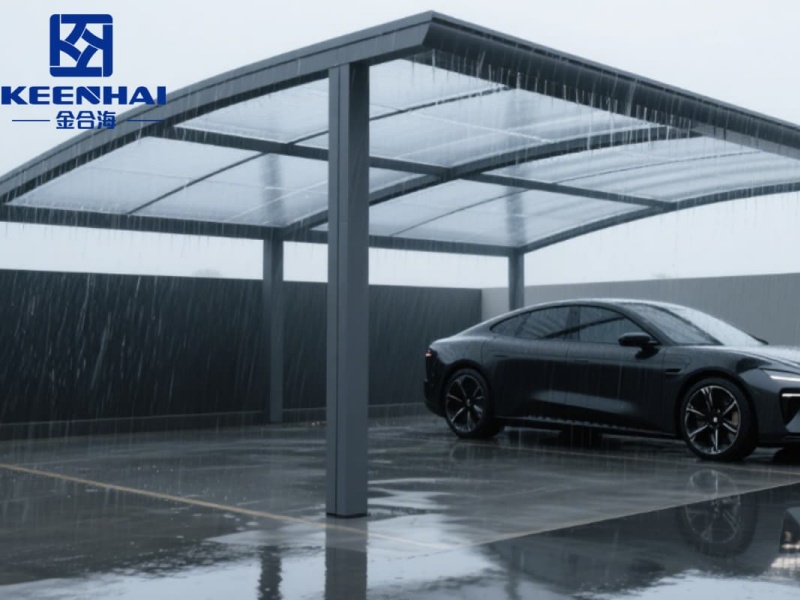
3. Roof Design and Functional Customization
The roof defines both the carport’s visual impact and its functional performance. A poorly planned roof can cause water pooling, excessive sun exposure, or structural stress, even if the frame is perfectly engineered. Customization ensures your roof complements your home while handling real-world conditions.
3.1 Flat, Low-Slope, and Mono-Pitch Roof Options
Choosing the right roof type depends on your home’s style and environmental factors. Flat roofs provide a minimalist, clean look but require reliable drainage. Low-slope roofs balance aesthetics with water runoff, while mono-pitch roofs allow for directional drainage and slightly higher ceilings.
Designers often follow these steps:
-
Match roof slope to architectural lines for harmony
-
Calculate snow or rain load to determine structural reinforcement
-
Evaluate roof overhang for vehicle and pedestrian protection
For example, a homeowner installing a Modern Metal Carport with a mono-pitch roof on a modern cubic house gained both style continuity and enhanced rainwater flow without adding visible bulk. Roof type selection directly impacts usability, durability, and visual integration.
3.2 Drainage Direction and Water Management
Proper drainage prevents pooling, wood rot at adjacent structures, and foundation damage. Even aluminum carports require careful planning of slope, gutters, and downspouts.
Effective strategies include:
-
Directing runoff away from driveways and entry points
-
Installing concealed gutters or scuppers for minimal visual impact
-
Verifying downspout capacity matches local rainfall intensity
Ignoring water flow can lead to corrosion on fasteners or standing water on flat roofs, so designing drainage in tandem with roof slope ensures long-term reliability and keeps your carport functioning optimally through every season.
3.3 Shade Coverage and Sun Control
Sun orientation and coverage affect vehicle protection and the comfort of adjacent outdoor spaces. A well-designed carport roof reduces heat buildup inside vehicles while allowing controlled sunlight to reach landscaped areas.
Considerations include:
-
Adjusting overhang depth to match seasonal sun angles
-
Incorporating partial shading slats or translucent panels for diffused light
-
Positioning the structure to avoid direct afternoon sun on sensitive vehicles
For compact modern lots, a Custom Aluminum Carport with optimized overhangs can protect both cars and home exterior finishes, maintaining a functional yet visually lightweight design.
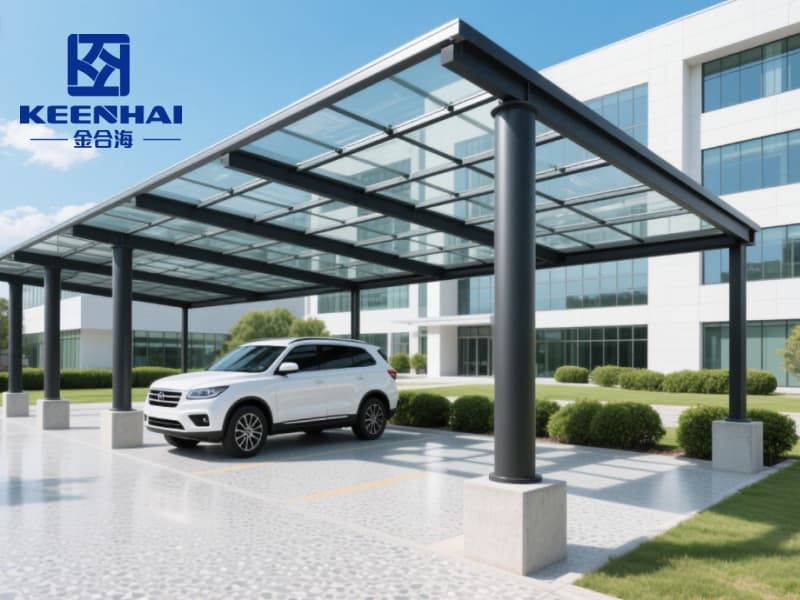
4. Material and Finish Customization
Choosing the right materials and finishes is essential for both longevity and modern aesthetic integration. The wrong aluminum profile, coating, or color can compromise durability, reduce curb appeal, and require early maintenance. Customization ensures the carport remains both functional and visually complementary to your home.
4.1 Aluminum Profiles for Modern Architecture
Aluminum is the preferred material for modern designs due to its lightweight yet strong characteristics. Profiles vary in wall thickness, extrusion style, and structural reinforcement. Using a reinforced aluminum frame allows for longer spans without additional columns, ideal for minimalist layouts.
Designers often follow these steps:
-
Select profile thickness according to anticipated load (snow, wind, vehicles)
-
Determine extrusion style for aesthetic alignment with home architecture
-
Check compatibility with roof systems and anchoring plates
In real installations, a Modern Metal Carport with custom extrusions achieved a seamless fit to a contemporary house, providing both strength and clean, modern lines. Aluminum profiles can transform a functional carport into a design statement.
4.2 Surface Finishes and Color Matching
Surface finishing protects the structure from wear and adds visual appeal. Powder coating is the most common choice because it offers uniform coverage, color variety, and excellent adhesion. Homeowners can match carport colors to window frames, roofing, or façade elements for a cohesive look.
Key considerations include:
-
Choose UV-resistant coatings to prevent fading
-
Evaluate finish texture (matte, satin, gloss) for design harmony
-
Test sample panels against sunlight to visualize real-life effect
For instance, a Custom Aluminum Carport painted in a warm gray tone complemented both a white stucco exterior and dark window frames, enhancing the home’s modern aesthetic without overwhelming the visual balance. Proper surface customization adds value beyond mere protection.
4.3 Corrosion Resistance for Different Climates
Aluminum’s natural corrosion resistance is enhanced by coatings, anodizing, or powder finishes, which is critical for homes in humid, coastal, or high-rainfall areas. Choosing the right treatment ensures your carport maintains structural integrity over decades.
Steps to ensure long-lasting protection:
-
Select powder-coated aluminum for uniform corrosion barrier
-
Consider anodized profiles in areas with salt exposure
-
Inspect and maintain roof and joint sealants periodically
Even in regions with heavy rainfall, a carefully finished aluminum carport remains rust-free, easy to clean, and visually consistent. Investing in high-quality finishes upfront eliminates frequent repairs and keeps the structure looking new.
5. Installation Flexibility and Site Adaptation
Installation flexibility is crucial for turning a custom design into a fully functional, durable, and visually cohesive carport. Even the best design can fail if the foundation or integration with existing structures is overlooked. Proper site adaptation ensures longevity, ease of use, and minimal disruption to your property.
5.1 Custom Anchoring Solutions for Different Ground Conditions
Every property presents unique challenges: sloped lots, uneven soil, or compacted driveways require tailored anchoring to maintain stability. A standard footing may not suffice, and skipping proper anchoring can result in structural shifting or uneven settlement over time.
Steps installers typically follow:
-
Conduct soil testing to identify load-bearing capacity
-
Select anchor type: concrete piers, surface bolts, or adjustable base plates
-
Adjust column placement or footing depth based on site elevation
For homeowners needing a heavy-duty solution, a Heavy-duty Carport can be anchored to accommodate both concrete and gravel foundations without compromising structural integrity. Custom anchoring ensures safety, stability, and long-term performance.
5.2 Modular Integration with Existing Structures
Modern homes often have existing patios, garages, or decks that must align with the carport layout. Modular systems allow sections to be pre-assembled and integrated seamlessly with these features, minimizing on-site labor and reducing installation time.
Practical tips include:
-
Measure adjoining structures for perfect alignment
-
Use modular brackets to connect with decks, walls, or fences
-
Verify roof and column heights match adjacent elevations
A homeowner installing a Custom Aluminum Carport next to a glass-walled garage achieved full integration by pre-configuring brackets and aligning roof slopes. This approach preserves both aesthetics and functionality, making the carport feel like an intentional part of the home.
5.3 Future Expansion and Structural Upgrades
Planning for expansion is essential if vehicle count may increase or heavier vehicles are anticipated. Aluminum modular frameworks allow sections to be added later without major reconstruction. Upgrading beams, adding extra bays, or increasing clearance height can all be executed with minimal disruption if the original design anticipates these possibilities.
Implementation steps:
-
Reserve foundation points for additional columns
-
Design beam joints to accommodate future extension
-
Confirm modular roofing panels can be added seamlessly
For example, families with growing fleets often start with a single or double Modern Metal Carport and later extend it to cover extra vehicles or storage units. This foresight saves costs, reduces downtime, and preserves the structural and visual harmony of the home.